

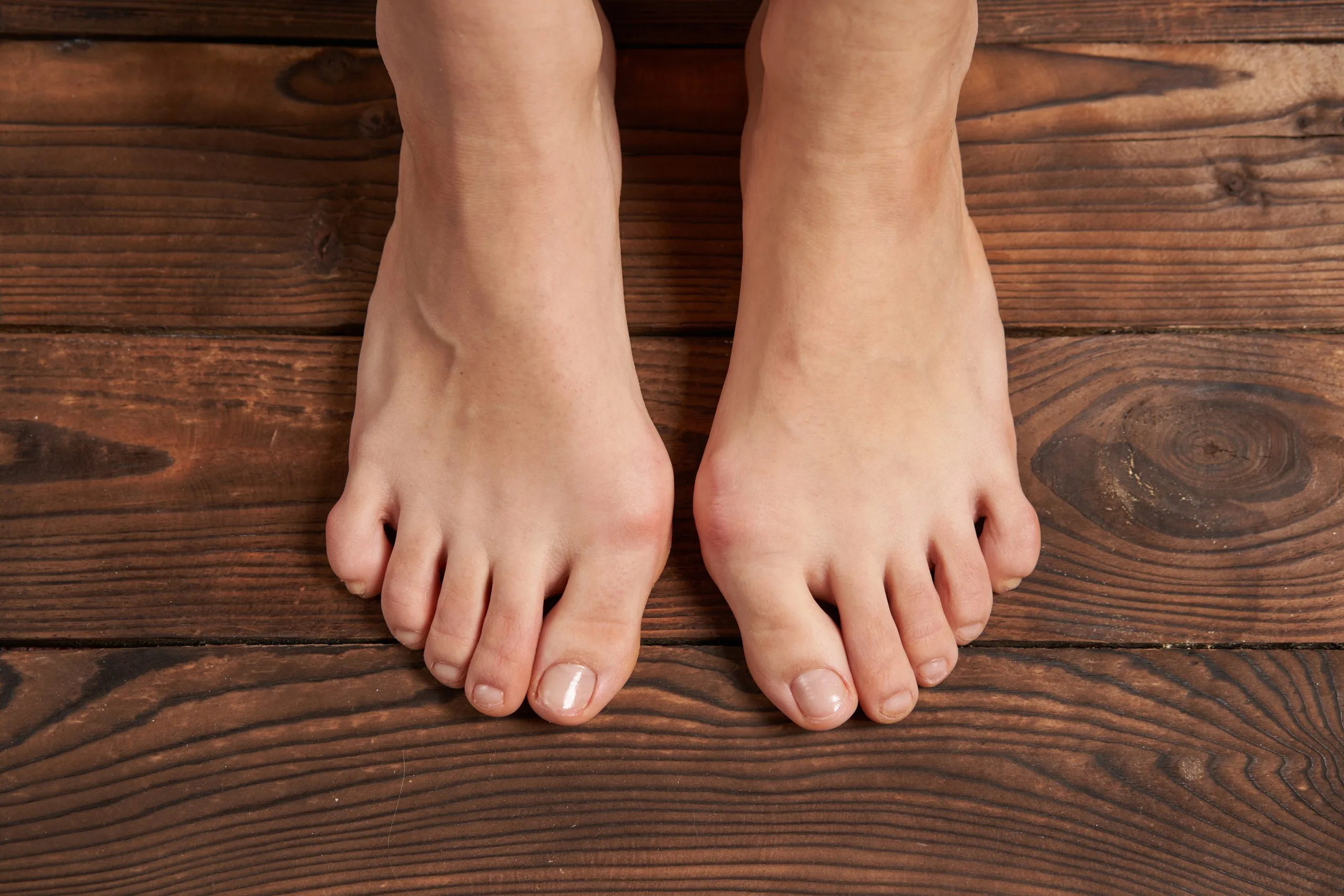
The most common signs of a failed bunion surgery are pain that never fully goes away (or returns months later), a bump that comes back at the base of the big toe, a big toe that drifts sideways again or now points too far the other way, stiffness that limits how far the toe bends, and new pain under the ball of the foot or in the smaller toes. If your foot still looks or feels wrong six months to a year after your procedure, that is not something you have to live with.
Bunion correction is one of the most frequently performed foot surgeries, and most people do well. But because a bunion is a three-dimensional bone misalignment – not just a bump – results depend heavily on how completely the deformity was corrected and how well the bone healed in its new position.
At Silverstone Podiatry, we specialize in evaluating and treating these complex cases, because a successful outcome depends on a procedure tailored to your unique foot structure.
A failed bunion surgery is any bunionectomy that does not achieve its two main goals: relieving pain and restoring normal alignment and function of the first metatarsophalangeal (MTP) joint. Failure does not always mean something dramatic happened – the bone may have healed, and the incision may look fine, yet the toe is still crooked, the joint is stiff, or the foot hurts in a new place.
It is also important to separate failure from normal recovery. Swelling, mild stiffness, and tenderness are expected for weeks and sometimes months, and bone remodeling continues past the point when you are back in a regular shoe. Most surgeons will not label an outcome a failure until six to twelve months have passed – unless the alignment is clearly off on X-ray before then.
Pay attention if you notice any of the following well past the expected recovery window (typically 3–6 months and beyond):
Pain at the big toe joint that plateaus or worsens instead of steadily improving
Chronic swelling that doesn’t subside with rest and elevation
A returning bump on the inside of the foot, or a new prominence
The big toe visibly drifting toward – or away from – the second toe
Difficulty bending the big toe upward, or a toe that feels “locked” (hallux limitus or rigidus)
Transfer pain, calluses, or burning under the ball of the foot
New hammertoe changes, corns, or crowding of the second toe
Trouble finding shoes that fit, or reverting to wide/soft shoes only
A limp, or shifting weight to the outside of the foot to avoid pushing off the big toe
Numbness or a sharp, electric sensation along the incision that persists
Any one of these alone may have a simple explanation. Several together deserve a fresh set of weight-bearing X-rays.
Screws and plates are meant to be silent partners. When they are not, symptoms tend to be specific:
A hard, tender spot you can press on directly over the implant or screw head
Pain that spikes in stiff or tight shoes, or when the area is bumped
Aching that increases with cold weather or long periods on your feet
A visible or palpable ridge or bump under the skin
Redness, irritation, or breakdown of the skin or tendons above the hardware
A feeling of clicking or shifting, which could indicate a loose screw
On X-ray: a screw that has backed out, changed position, or loosened
Hardware that has done its job and is now causing irritation can often be removed as a straightforward procedure. Hardware that shifted before the bone healed usually points to a structural problem that needs correcting at the same time.
An unsuccessful bunionectomy rarely stays the same – the foot compensates. If the big toe cannot bear its share of load, the second and third metatarsals absorb it, leading to metatarsalgia, thick calluses, or hammertoe changes. Many patients also change how they walk, creating ankle, knee, hip, or low-back soreness over time.
The good news: a disappointing first result does not close the door. Re-imaging, a gait assessment, and a clear diagnosis of which type of failure occurred usually point to a specific solution – sometimes hardware removal, orthotics, or joint mobilization, and sometimes a formal bunion surgery revision.
Consider a revision evaluation if:
Pain, stiffness, or deformity persists beyond six to twelve months after your original surgery
The bump or crooked toe has clearly returned
The big toe now points away from the other toes
Weight-bearing X-rays show a nonunion, malunion, or shifted hardware
Ball-of-foot pain, calluses, or new toe deformities have developed
You are limiting activity or footwear choices to manage discomfort
Evaluation begins with weight-bearing imaging, an assessment of how you walk, and a review of what was done previously – because correcting recurrence caused by joint instability is a very different plan than correcting a stiff, overcorrected toe.
Lingering pain, a returning bump, a toe that drifts in either direction, stiffness, or new pain under the ball of the foot are the clearest signs of a failed bunion surgery. If your foot still does not look or feel right well after recovery should have finished, a focused re-evaluation with fresh weight-bearing X-rays is the right next step. The sooner it happens, the more correction options remain available.

About the Author
Dr. Nick Argerakis
July 29, 2026
Take Your First Step
Get in touch with our team for a free consultation to determine the best path for you.